
BMI for Teenagers represents a period of rapid development, accompanied by hormonal shifts and physical growth, making understanding BMI essential. The bodies of teenagers are still developing, so BMI assessments should use distinct standards from those used for adults. The BMI tool serves as a method for parents, healthcare professionals, and teens themselves to track optimal growth and development while detecting health concerns and promoting improved lifestyle behaviours.
This guide explains BMI for teenagers by providing information about its calculation process along with healthy range definitions and guidelines for using it without causing body image problems or unneeded stress.
Introduction to BMI for Teenagers
Teenagers use BMI as a fundamental assessment that evaluates body weight relative to height, alongside age and sex-specific factors. The measurement of BMI in teenagers requires comparison against growth charts, which show the average developmental pattern, because their bodies mature at different speeds.
A BMI value of 20 has different interpretations for 13-year-old girls compared to 17-year-old boys. The assessment of teenage health requires BMI-for-age percentiles because they provide the necessary context for evaluation.
What is BMI and How is it Calculated?
BMI, or Body Mass Index, is a number calculated by dividing weight in kilograms by height in meters squared:
BMI = weight (kg) ÷ height (m²)
For example:
A teenager weighing 50 kg with a height of 1.6 meters would have a BMI of 19.5.
The essential distinction exists because this number by itself does not define if teenagers are underweight or healthy, or overweight. Teenagers need to place their BMI number on a BMI-for-age growth chart which was created for their age group. The chart displays the BMI comparison between a teen and their age group members according to their gender.
Why is BMI Different for Teenagers?
The BMI assessment for teenagers differs from adult measurements because:
- Growth and puberty: BMI measurements need to consider each teen’s developmental stage during puberty because this period brings fast weight and height changes.
- Gender differences: The physical changes between boys and girls during development create distinct body composition patterns. Teenage boys tend to develop greater muscle volume than girls who typically maintain higher body fat percentages during normal growth.
- Percentiles matter: Teen BMI assessments use percentile rankings to determine how a youth’s body measurements relate to their age-and-sex-matched peer group.
This ensures BMI is interpreted in a way that reflects healthy teenage growth patterns.

BMI Percentile Charts for Teenagers
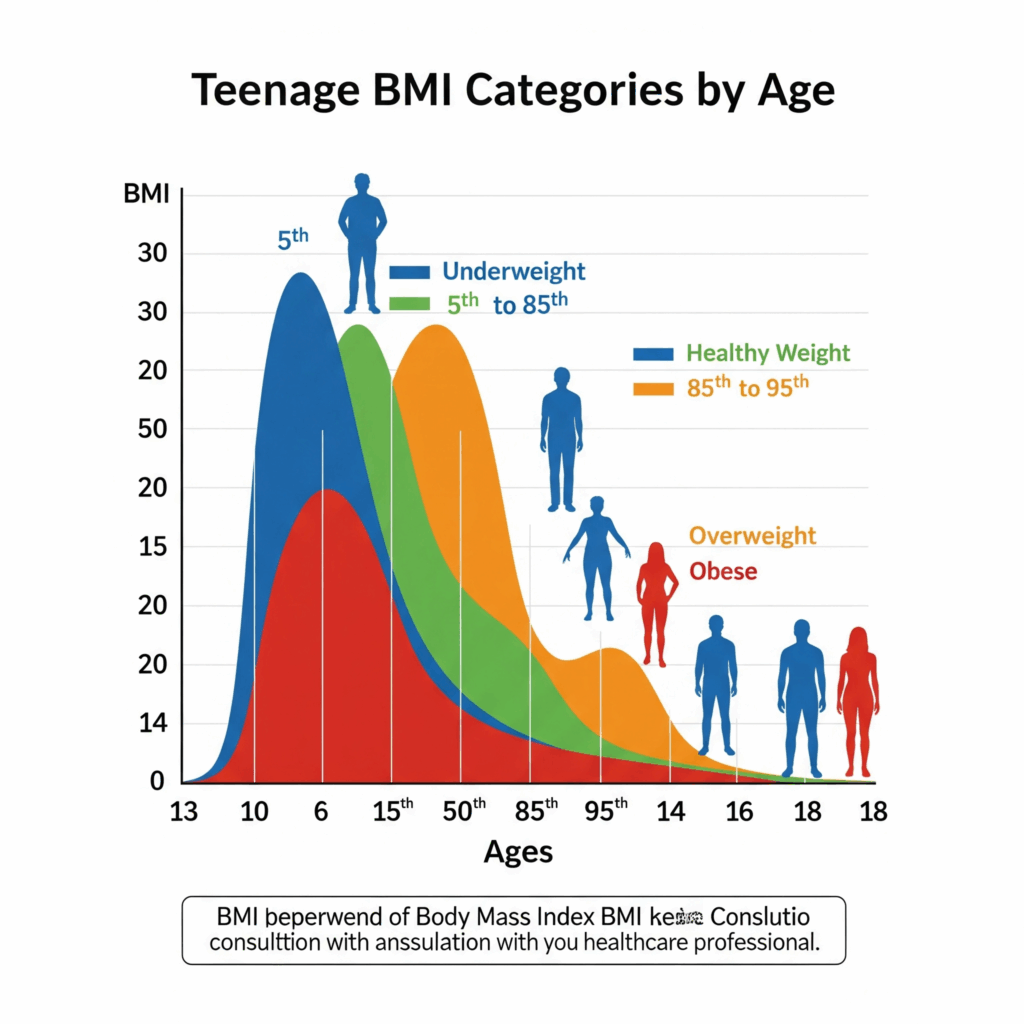
The evaluation of BMI for teenagers requires comparing their scores to percentile charts which have been standardized. The standard weight assessment system used by medical professionals and health organizations bases its evaluations on these percentile charts:
| Underweight: Less than the 5th percentile |
| Healthy weight: 5th percentile to less than the 85th percentile |
| Overweight: 85th to less than the 95th percentile |
| Obese: 95th percentile or higher |
For example:
- A 14-year-old boy in the 90th percentile would be considered overweight.
- A 16-year-old girl in the 50th percentile would be considered healthy weight.
By using BMI for teenagers in percentile form, doctors can better account for the natural differences in growth between individuals.
Healthy BMI Range for Teenagers
A healthy BMI for teenagers exists as a range of percentiles instead of one specific value:
- Girls should aim to maintain their BMI between the fifth and eighty-fifth percentile ranges.
- Boys need to stay between the fifth and eighty-fifth percentile ranges for their BMI measurements.
Different factors including genetic makeup and physical activity intensity along with developmental progress influence what defines a healthy state. A teenage athlete who has built muscle mass might have a higher BMI reading yet maintain excellent health status.
What BMI Tells Us About Teen Health
When BMI functions properly it delivers useful insights about teenage health status including:
- Identifying underweight risks: A BMI below the 5th percentile may signal potential nutritional deficiencies or growth concerns.
- Highlighting overweight risks: A BMI above the 85th percentile suggests a greater chance of developing health issues like diabetes, high blood pressure, or joint problems later in life.
- Monitoring growth patterns: BMI trends over time help ensure a teenager’s development is progressing normally.
BMI functions as an initial screening instrument but does not establish medical diagnoses. The screening method indicates possible health concerns that require additional diagnostic evaluations.
What BMI Doesn’t Tell You About Teenagers
While BMI for teenagers is useful, it has important limitations:
- It doesn’t measure body fat directly. Teens with more muscle, such as athletes, may have a high BMI but low body fat.
- It doesn’t show fat distribution. Abdominal fat carries higher health risks, but BMI can’t differentiate this.
- It doesn’t account for lifestyle. Diet quality, exercise habits, and sleep patterns all play a role in health but are not reflected in BMI.
- It doesn’t replace professional evaluation. Doctors often use additional tools like waist measurements, blood pressure checks, or lab tests.
This is why BMI should always be considered alongside other health indicators.
How Parents and Teens Can Use BMI Responsibly
BMI for teenagers should be used carefully to avoid unnecessary pressure or negative body image. Parents and teens can use BMI responsibly by:
- Viewing it as a guide, not a judgment.
- Focusing on overall health, not just weight.
- Encouraging balanced nutrition and activity instead of strict dieting.
- Consulting a healthcare professional if BMI results are concerning.
This approach ensures that BMI supports positive health habits instead of becoming a source of stress.
Tips for Maintaining a Healthy BMI in Teenagers
Maintaining a healthy BMI during the teenage years is about balance, not perfection. Some tips include:
- Balanced diet: Encourage fruits, vegetables, lean proteins, and whole grains.
- Regular physical activity: At least 60 minutes of moderate to vigorous exercise most days.
- Proper sleep: Teenagers need 8–10 hours of sleep per night.
- Healthy routines: Limit screen time, reduce sugary drinks, and manage stress effectively.
By focusing on healthy habits, teens can maintain a stable BMI for teenagers without obsessing over numbers.
Conclusion
BMI stands as a useful assessment tool for adolescents because it monitors their development and detects possible weight problems. However, it should not be viewed in isolation. Parents and teens can use BMI percentiles together with knowledge of healthy ranges and its limitations to create better lifestyle choices which prevent excessive anxiety. The complete picture of health requires more than BMI because it depends on dietary habits alongside physical exercise and sleep patterns and emotional wellness.
FAQ
1. What is the average BMI for a 15-year-old?
The typical BMI measurement for 15-year-olds remains between the 5th and 85th percentile based on gender and age standards.
2. How do I know if my teenager’s BMI is healthy?
Use a BMI-for-age percentile chart to evaluate BMI values. A healthcare professional will assist with interpreting the results.
3. Can teenagers be healthy even if their BMI is high?
Teenagers with greater muscle development tend to have elevated BMI numbers yet maintain good health.
4. What percentile is considered overweight for teens?
The range from the 85th percentile up to but not including the 95th percentile qualifies as overweight.
5. Should parents worry if BMI changes during puberty?
Normal variations occur but ongoing BMI measurements outside the recommended range should prompt medical consultations.